


Description
McSpadden Mountain Dulcimers
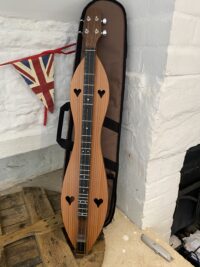
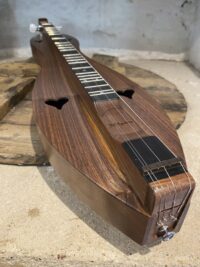
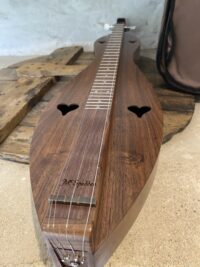
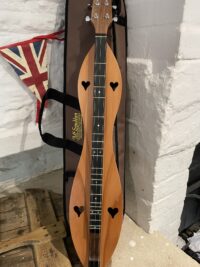
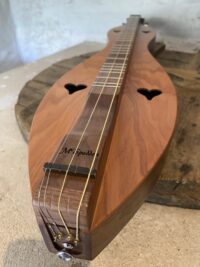
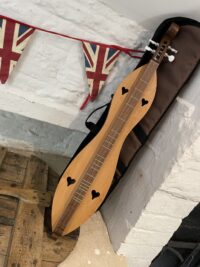
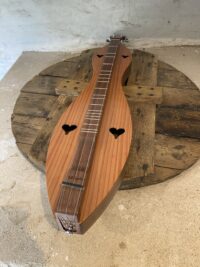
We are pleased to announce that we are now stockists in the UK for McSpadden Mountain Dulcimers.
These beautiful instruments are a real delight to play and sound wonderful.
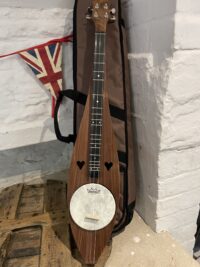
We are offering a great selection in different timber options.
Would you like to try one ? Well give us a call and arrange to come and visit us here in North Yorkshire.
We will give you undivided personal attention in a safe environment, and hopefully an enjoyable time.
ABOUT MCSPADDEN DULCIMERS
Lynn McSpadden was studying for the Seminary when his roommate brought in a dulcimer and showed him how to play it. Lynn became fascinated by it and decided to make himself one. He borrowed one from an acquaintance in Leslie, AR made by McKinley Craft of Bath County, KY, to use as a model and made his first dulcimer in 1962. Friends asked him to make them one and that began the development of the McSpadden Mountain Dulcimer. Lynn with his father and brother developed designs and construction methods to allow making large numbers of dulcimers while maintaining the quality. Improvements over the years have led to the current line of models.
The McSpaddens sold the business to Jim and Betty Woods in 2001 and they have continued development of new models. Models introduced since the sale include the Schnaufer models, the six strings both standard range and baritone, the basses, and the dulci-banjos. At the time of the sale we were building number 42,000 and at this writing we are closing in on number 62,000. Building lots of dulcimers doesn’t prove much but having those dulcimer being played by satisfied customers does indicate that we know what we are doing and how to serve the dulcimer community.
Many craftsmen have participated in the building of McSpadden dulcimers over the years. Many of those have retired or sadly passed away. However, the traditions continue with Jim Woods being the current most experienced at 18 years. You can place your trust in our instruments and service.
The Appalachian dulcimer was forged in the melting pot of the wagon roads and river routes of the frontier. The Scots and Irish settlers could hear the drone of the pipes in this sturdy and easily constructed zither and the English found it to be an appropriate accompaniment to their ballads and laments. They reduced the number of strings to just three or four, as wire was a precious commodity in the wilderness, and added a raised fingerboard to allow the playing of quick jigs and reels with a plectrum. By reducing the strings the instrument became more adaptable to more types of music within this theater. Unlike other instruments that have a distinct evolution to their present form, the dulcimer is still being reinvented all the time. The shapes and sounds vary widely throughout the region.



Reviews
There are no reviews yet.